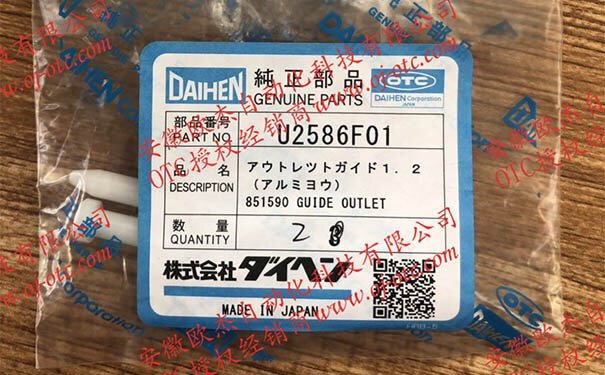
In-Depth Technical Analysis: Genuine OTC DAIHEN U2586F01 Low-Friction Nylon Wire Liner for MIG/MAG Welding Torch Assemblies
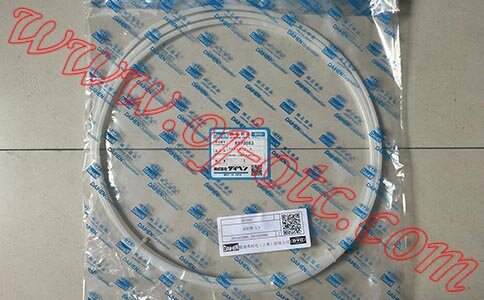
OTC DAIHEN U2586F01 Special Nylon Wire Liner (Self-Lubricating Wire Conduit) is the premium internal wire-feeding channel custom-engineered for classic OTC MIG/MAG welding torches. In automated robotic and manual gas-shielded welding, welding wire travels through multi-meter torch conduits and gooseneck curves. Traditional steel spiral wire liners exert abrasive friction against the wire surface, shaving off microscopic copper flakes from copper-plated solid wire or aluminum shavings from aluminum wire. Accumulated metal dust quickly clogs the contact tip bore, triggering wire feed pulsation, burnbacks, and arc wandering. Manufactured from Japanese high-density self-lubricating nylon polymer, the U2586F01 provides a mirror-smooth inner bore that eliminates wire shaving, reduces wire feeder motor load, and extends contact tip service life.
🔍 Self-Lubricating Nylon Polymer & Kink-Resistant Tube Advantages
- Zero Wire Shaving & Self-Lubricating Bore: Molded from OEM specialized high-molecular-weight nylon, the inner wall of U2586F01 features an ultra-low friction coefficient. Welding wire glides smoothly without scraping against metallic coils, preventing copper and aluminum dust from flaking off and accumulating inside the front-end contact tip.
- High Radial Rigidity & Kink Resistance: Despite its smooth flexibility, U2586F01 is engineered with thick, kink-resistant polymer walls. During complex 6-axis robotic wrist rotations or sharp manual torch bending, the inner bore remains round without flattening or collapsing, preventing wire binding and feeder motor stalling.
- Concentric Fit with OTC Torch Cable Housings: The outer diameter of U2586F01 is machined to OEM tolerances to fit snugly inside OTC welding torch cable casings. Precise outer dimensions prevent axial drifting and ensure zero-gap alignment between the wire feeder drive rolls and the torch contact tip.
🛠 On-Site Liner Replacement Guide & Avoiding Cutting Burrs and Dust Clogging
- 🚨 Critical Maintenance Rule: Trim Liner Ends Squarely and Deburr Inner Edges! When trimming U2586F01 to fit torch cable assemblies, technicians must use a sharp polymer tubing cutter. **Never use dull wire cutters or pliers that crush the nylon tube!** Crushing the liner forms oval restrictions and internal lips that scrape welding wire as it enters the conduit. Trim the tube cleanly at a 90-degree angle and lightly chamfer the inner edge to ensure smooth wire entry.
- Mandatory Compressed Air Purging During Spool Changes: Even with self-lubricating nylon liners, environmental workshop dust can settle inside the conduit over time. Electricians **must purge the liner with clean, dry compressed air from the feeder end every time a wire spool is replaced** to keep the feeding channel pristine.
- Verify Collet and Diffuser Alignment: Ensure that the front end of U2586F01 seats firmly against the brass collet or gas diffuser inside the torch head without gap separation, preventing shielding gas leaks and wire buckling.
📞 Large-Scale Supply of Genuine OTC U2586F01 Nylon Wire Liners
We maintain an extensive strategic inventory of genuine U2586F01 self-lubricating nylon wire liners to support automated MIG/MAG and aluminum welding cells in automotive EV tray, shipbuilding, and precision metal fabrication facilities. We 100% guarantee that all supplied liners are brand-new, genuine Japanese OEM products fully compliant with internal smoothness and radial rigidity standards. We reject recycled plastic aftermarket liners that soften under heat and cause wire feeding stutter. We support B2B bulk procurement with complete technical documentation.
Technical Support & Direct Inquiry: WhatsApp: +86-18096631656 | Mail: ahojotc@gmail.com
- Complete OTC MIG/MAG Torch Consumables BOM: Optimal wire feeding relies on the entire consumable chain. To procure matching contact tips, gas diffusers, nozzles, and wire feed rolls (such as K5439B12), check our technical catalog for full BOM diagrams to ensure accurate part selection.