



1. Core Structure and Function Analysis of OTC Daihen Robotic Coaxial Cables
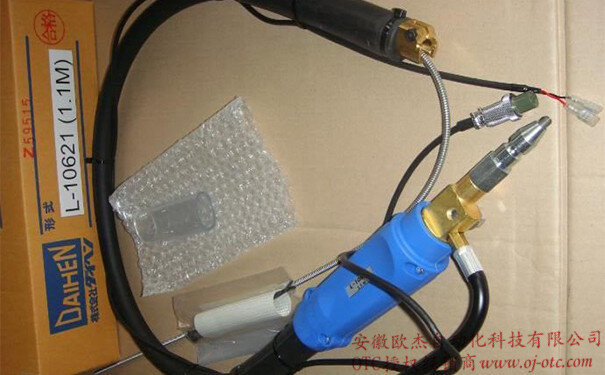
In an OTC DAIHEN automatic arc welding workstation, the thick black cable connecting the wire feeder to the front of the welding torch (shock sensor) is known as the Coaxial Cable (often referred to on-site as the “single-line cable” or “torch tail cable”). It serves as the “main artery” ensuring the smooth execution of the entire welding process.
The coaxial cable is termed a “single-line” solution because of its high industrial integration. It perfectly encapsulates four dimensions of transmission channels within a single, highly flexible, and flame-retardant outer jacket:
1. Power Transmission: Features a built-in, large-cross-section pure copper braided mesh, carrying hundreds of amperes of pulsed welding current smoothly to the contact tip.
2. Fluid Transport: Embedded with high-pressure resistant hoses to ensure that CO2 or Argon mixed shielding gas is delivered to the weld pool without leaks or interruptions.
3. Wire Guiding: The center houses a removable hollow wire guide liner, ensuring ultra-low resistance feeding of steel or aluminum wire even under the high dynamic twisting of the robotic arm.
4. Safety Feedback: Incorporates high-fidelity shielded micro-signal wires connected to the torch’s shock sensor, enabling split-second emergency stops in the event of a collision.
📷 Figure 1: Real view of the OTC Daihen highly flexible robotic coaxial cable (Model L10621 example)
2. Common OTC Coaxial Cable Model Matrix and Physical Matching Requirements
OTC robots with different arm reaches (e.g., 1.4m vs. 2.0m) and varying cable routing structures (e.g., V8 series with internal routing vs. B6 series with external routing) require strictly differentiated coaxial cables in terms of total length, flange interface dimensions, and anti-torsion mechanical design. Before purchasing a replacement, please be sure to verify the original factory model nameplate:
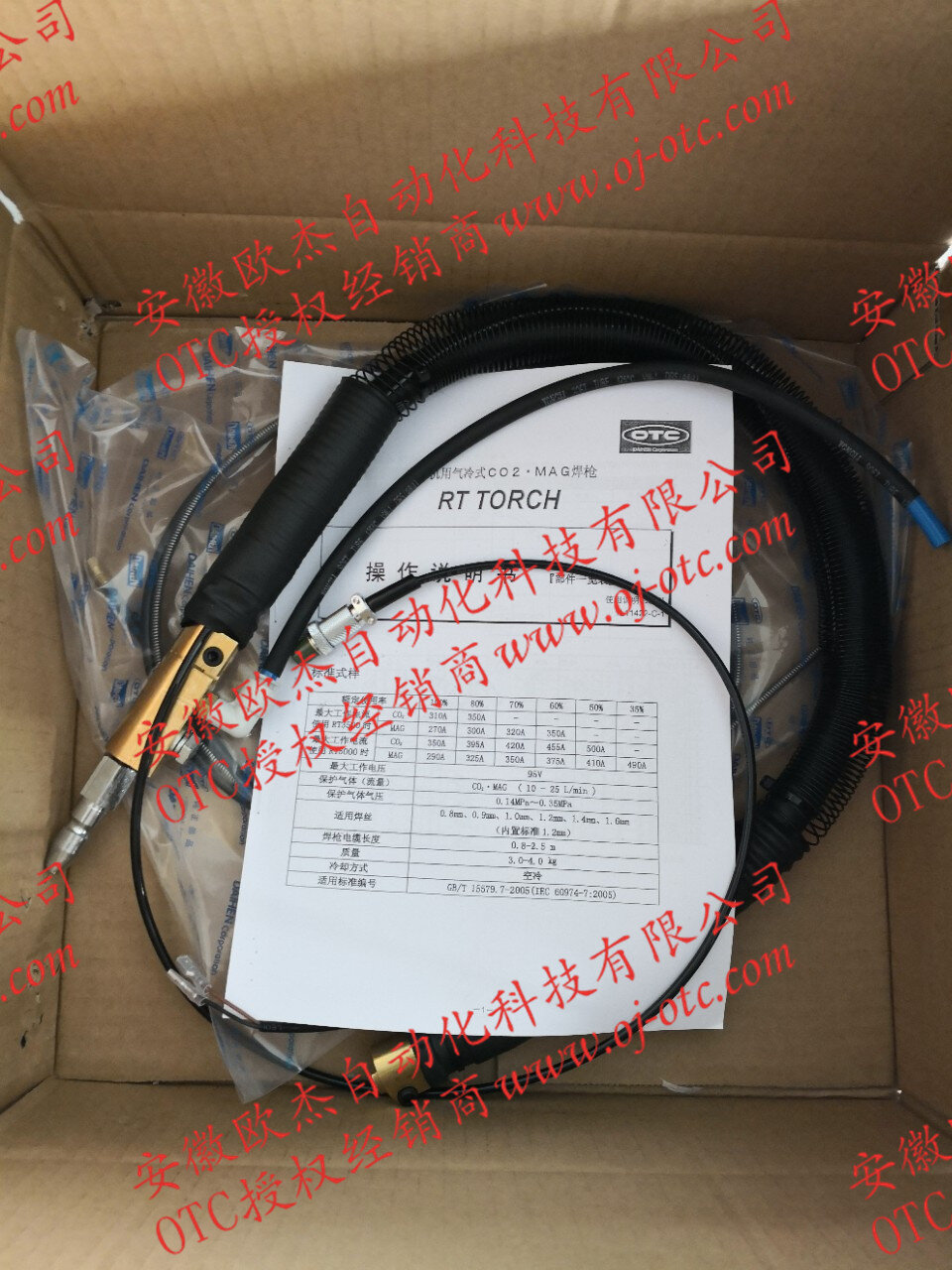
📷 Figure 2: Structural diagram of connection flanges and mechanical ports on both ends of the OTC robotic coaxial cable
| Common Official Model Code | Physical Features & Length | Typical Compatible OTC Robot Models & Applications |
|---|---|---|
| L-10621 Series | Standard length / External routing | Commonly used for classic external-cable models with a standard 1.4m arm reach (e.g., FD-B6, AII-B4). |
| L-10638 Series | Extended length / External routing | Specifically designed for 2.0m long-reach external-routing robots (e.g., FD-B6L) to meet wide-span extension requirements. |
| L-10641 Series | Special armored / Internal routing | Customized for hollow-arm robots (e.g., FD-V8, FD-V6S), engineered to withstand extremely high-frequency internal friction and torsional stress. |
| L-10624 Series | Heavy-duty water-cooled | Integrates an additional two-way cooling water circulation loop, dedicated to 500A high-current continuous heavy-duty water-cooled welding torch systems. |
3. Physical Degradation Risks and Workshop Maintenance Guidelines
Constantly subjected to intense mechanical fatigue during the high-frequency twisting and bending of the robot, coaxial cables are classified as long-term, heavy-wear consumables. Neglecting regular inspections can easily lead to severe cascading downtime failures on the production line.
💡 Core Guidelines for Coaxial Cable Fatigue Diagnosis and Alarm Troubleshooting:
- Physical Lifespan and Separate Replacement of the Wire Guide Liner: Under standard 24-hour two-shift high utilization rates, the external flexible jacket, gas hose, and power line of the coaxial cable typically last 1.5 to 2 years. However, its core internal wire guide hose (liner) is a high-frequency consumable. Due to constant high-speed friction from the hard welding wire, it is highly prone to grooving and iron dust accumulation at sharp bends. The inner liner must be pulled out for high-pressure air cleaning every 3-6 months. When severely worn, a separate liner should be purchased for a quick replacement.
- Beware of E-210 and A5016 Fatal Cascading Alarms:
• E-210 (Wire Feeding Error): If the coaxial cable is excessively bent or the internal guide tube is damaged, wire feeding resistance will increase exponentially. This severely overloads the wire feed motor, triggering an E-210 fault at the welding machine, which can lead to arc breaks or wire snapping and burning back to the contact tip.
• A5016 (Shock Sensor Action): If the cable is subjected to long-term torsional stress, the extremely thin micro-sensor signal wire inside may suffer an invisible break. The system will misinterpret this as a severe torch collision, instantly locking the control cabinet and forcing an A5016 alarm. - Arc Ignition Difficulties and Porosity Issues: If a large area of the internal pure copper braided mesh breaks, the transmission impedance of the main welding current will surge. This causes a sharp drop in energy during ignition, resulting in “arc start failure.” Furthermore, if micro-leaks (pinholes) develop in the built-in gas hose, the weld will lose gas shielding, generating dense oxidation porosity.
🛠️ Quickly Access All Coaxial Cable Models, Liners, and Original Tech Support
To prevent a single aging cable from shutting down an entire automated welding production line, enterprise maintenance departments should establish strict cable inspection and inventory mechanisms. Whether you need to purchase a brand-new complete single-line coaxial cable (e.g., L10621, L10641), an individual highly wear-resistant perfluoro inner liner, or troubleshoot stubborn E-210 / A5016 fault codes, please provide your on-site robot nameplate model. Contact us directly to get the latest official standard factory quotes and real-time spot delivery services: